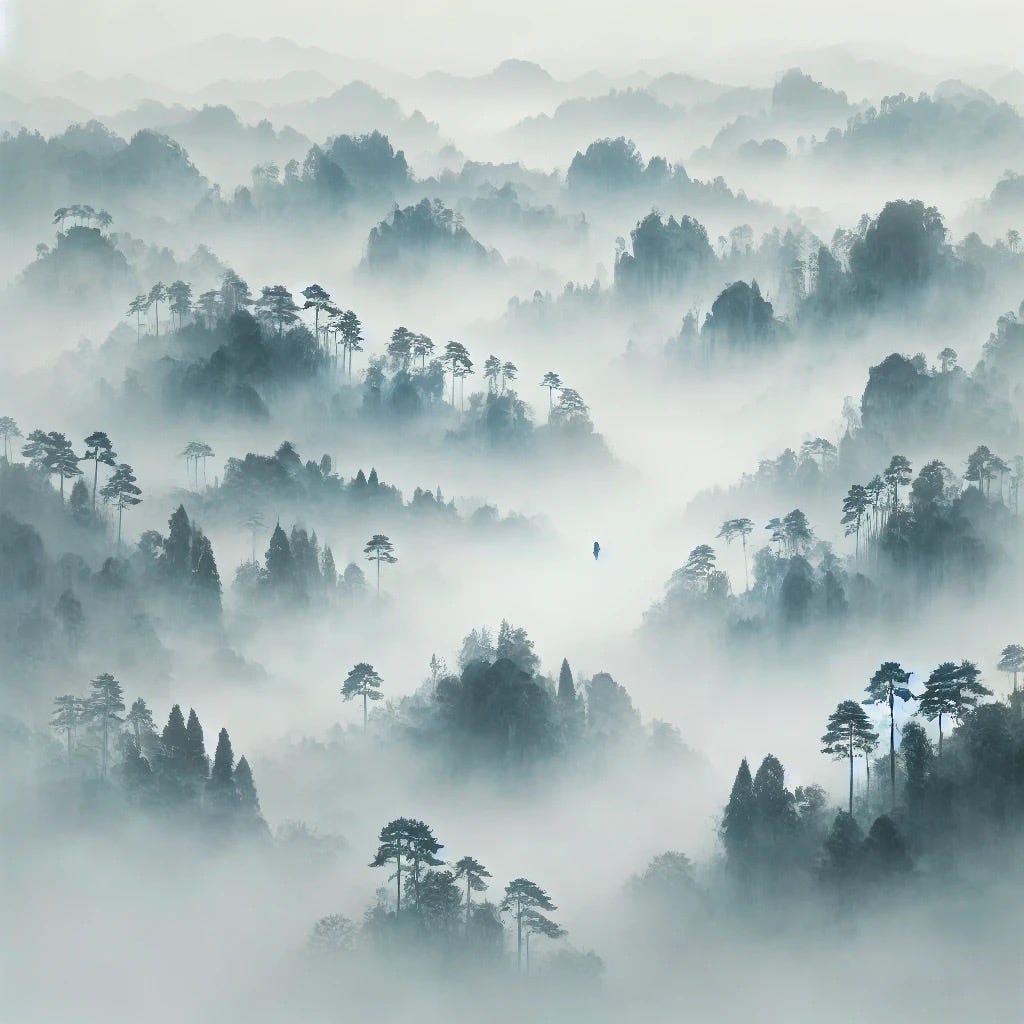
The implicationscations of ‘Form is Emptiness’ as it relates to life and Photography.

The phrase “Form is none other than emptiness. Emptiness is none other than form,” is a central teaching from the Heart Sutra in Mahayana Buddhism. It speaks to the inseparability of form—the tangible, physical world—and emptiness, the absence of inherent, permanent essence in all things.
This teaching challenges our ingrained belief that the objects and experiences around us possess a fixed, lasting reality. Instead, Buddhism reveals that everything is transient, interconnected, and empty of a self-sustaining existence. In the realm of life and photography, this concept invites a profound shift in how we perceive and capture the world.
Photography, by its nature, captures fleeting moments and transforms them into seemingly permanent images. However, when viewed through the lens of Buddhist philosophy, these images are not just static forms; they are also representations of emptiness. They remind us that the moments we capture are transient, mere reflections of a deeper reality where nothing is fixed or permanent. Understanding this, a photographer can approach their craft with a deeper awareness of the impermanence and interconnectedness of life. Each photograph becomes more than just an image; it is a meditation on the nature of existence. It captures not only the form but also the emptiness—the understanding that what is seen is just a momentary expression, devoid of lasting substance. This perspective can transform photography into a practice of mindfulness, where each shot is an acknowledgment of the fleeting beauty and inherent emptiness of all things.
“form is emptiness, emptiness is form,” At its core, this concept invites us to reconsider the relationship between the subject and the observer, between what is captured and what is perceived. In traditional photography, the focus is often on the form—the object, person, or scene in front of the camera. This form is usually seen as something with substance, a fixed reality that the camera simply records. However, when we apply the Buddhist understanding of emptiness, we begin to see that the subject of a photograph is not an isolated, independent entity. Instead, it exists in a web of relationships, defined not by its own inherent qualities but by its context, its impermanence, and its connection to everything else.
The photograph, then, becomes a record not just of what is, but of what is constantly changing, evolving, and ultimately empty of a permanent, unchanging self. For the photographer, embracing this philosophy means cultivating a mindful approach to their craft. Instead of merely seeking to capture beautiful images, the photographer begins to see each shot as a reflection of the dynamic, impermanent nature of reality. This awareness can lead to a deeper, more intentional practice, where every image is infused with a sense of the present moment’s ephemerality. Moreover, this perspective can also influence how photographs are shared and viewed.
When a photographer understands that form is emptiness, they might present their work in a way that encourages viewers to contemplate not just the surface appearance but the underlying truth of impermanence and interconnectedness. This could mean creating series that highlight change over time, or using techniques that emphasize the transient nature of the subject. In conclusion, the Buddhist teaching that “form is none other than emptiness, emptiness is none other than form” offers a profound framework for life and photography. It challenges photographers to look beyond the superficial and to capture the essence of life’s impermanence. By doing so, photography becomes not just a means of preserving moments but a spiritual practice that invites both the photographer and the viewer to reflect on the true nature of reality.